

Adapted from our friends at SEA
You’ve just landed at Wichita Dwight D. Eisenhower National Airport (ICT) after spending hours in a metal tube at 35,000 feet. As your plane taxis in, you’re already thinking about grabbing your bags, heading home, or starting your Wichita adventure.
Then… the plane stops.
A few moments later, the captain announces, “We’ll be waiting just a few minutes before we can pull into the gate.”
If you’ve ever found yourself wondering, “We already landed. What are we waiting for?” you’re not alone.
The truth is, this can happen at any airport, especially one that’s growing like ICT. While airlines build their schedules around the best-case scenario, good weather, fully staffed operations, and no unexpected maintenance, real life doesn’t always cooperate. Airports also don’t control when or how many flights airlines schedule, so everyone works together to keep operations running as safely and smoothly as possible.
Here are four of the most common reasons your aircraft might take a little longer than expected to reach the gate after landing.
-
Your Gate May Not Be Available…Yet
At ICT, some gates are leased to specific airlines, while others are shared “common use” gates that any airline can reserve when needed.
Each airline plans months in advance which aircraft will use which gates based on its schedule. But air travel is full of surprises. Weather delays, staffing shortages, mechanical issues, or an aircraft leaving the gate later than expected can create a ripple effect throughout the day. When that happens, airlines have to decide how to adjust the rotation of their aircraft across all of their gates.
Common use gates provide extra flexibility, and airlines can reserve them when additional space is available. However, during the busiest parts of the day, nearly every gate may already be occupied or reserved. The challenge becomes even greater because many aircraft remain parked overnight (called RON, or Remain Overnight) so they’re ready for early morning departures.
Sometimes, the quickest option is simply waiting a few extra minutes for your assigned gate to become available. While it may not be the news passengers want to hear, it’s often the safest and most efficient way to keep airport operations running smoothly.
-
Your Ground Crew Is Getting Ready
Landing is only half the journey. Before passengers can safely step off the aircraft, a team of airline employees has to be in place.
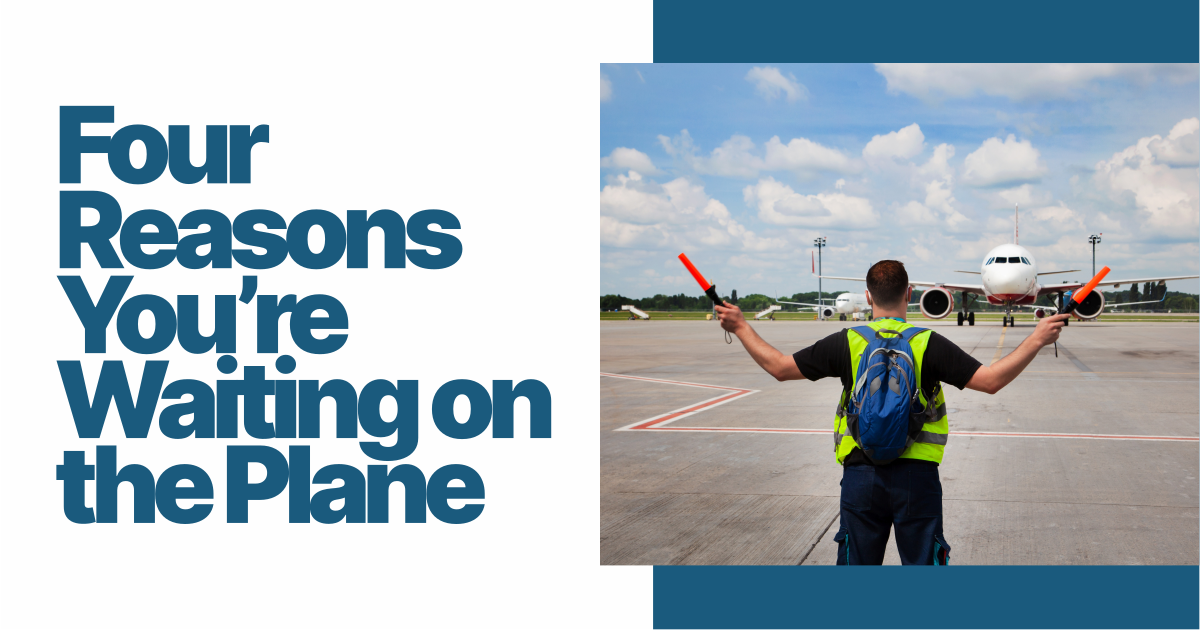
That includes marshallers guiding the aircraft into the gate, ramp agents ready to unload bags and service the aircraft, someone to position the jet bridge, and customer service agents waiting to greet your flight in the terminal.
Sometimes, those team members are finishing work on another arriving or departing flight or making their way to your gate. When that happens, your aircraft may need to wait a few extra minutes before pulling in.
The good news is that your airline knows you’re arriving and is working to get everything in place as quickly and safely as possible. Those few extra minutes help ensure everyone can do their jobs safely and get you on your way.
-
Air Traffic on the Ground Is Like a Giant Game of Tetris
Just because your plane has landed doesn’t mean the journey to the gate is over.
The airport works closely with the FAA air traffic control tower and the ramp tower to safely move every aircraft between the runway and its gate. Which runway is being used, where your gate is located, and even the direction the wind is blowing all play a role in the route your aircraft takes across the airfield.
At busy times, controllers are coordinating multiple moving aircraft at once. It’s a bit like a giant game of Tetris, carefully fitting pieces together while keeping everyone moving safely and efficiently.
Those extra few minutes of taxiing or waiting are all part of making sure every aircraft reaches its gate safely while keeping the entire airport operating as smoothly as possible.
-
Mother Nature Has a Say, Too
If you’ve spent much time in Kansas, you know our weather likes to keep everyone on their toes. While Wichita enjoys plenty of sunshine, we’re also no strangers to strong winds, thunderstorms, ice, and snow.
Even a simple shift in wind direction can change which runways aircraft use for arrivals and departures. When that happens, air traffic controllers and the ramp tower have to quickly adjust that giant game of Tetris, safely rerouting aircraft across the airfield while keeping everyone moving.
Severe weather adds another layer of complexity. Heavy rain can slow ramp operations, lightning may temporarily pause work outside to protect ground crews, and winter weather requires additional time for snow removal or aircraft deicing. Every decision is made with safety as the top priority.
While these weather-related delays can be frustrating, they’re a sign that everyone from pilots and controllers to ground crews is working together to get you to the gate as safely and efficiently as possible. Sometimes a few extra minutes of waiting on the ground means a much safer operation for everyone involved.
Waiting to reach the gate is rarely anyone’s favorite part of flying, especially when you’re eager to start your trip or get home. But those few extra minutes are often the result of hundreds of people working together behind the scenes to keep passengers, crews, and aircraft safe while keeping the airport running as efficiently as possible.
The next time your plane pauses after landing, remember that there’s a lot happening outside your window. Whether it’s waiting for your gate to open up, your ground crew to get into position, another aircraft to clear the way, or weather conditions to improve, every decision is made with safety first.
So sit back, enjoy a few more moments in your seat, and know that you’re almost there. Welcome to ICT. We’re glad you’re here!